Research
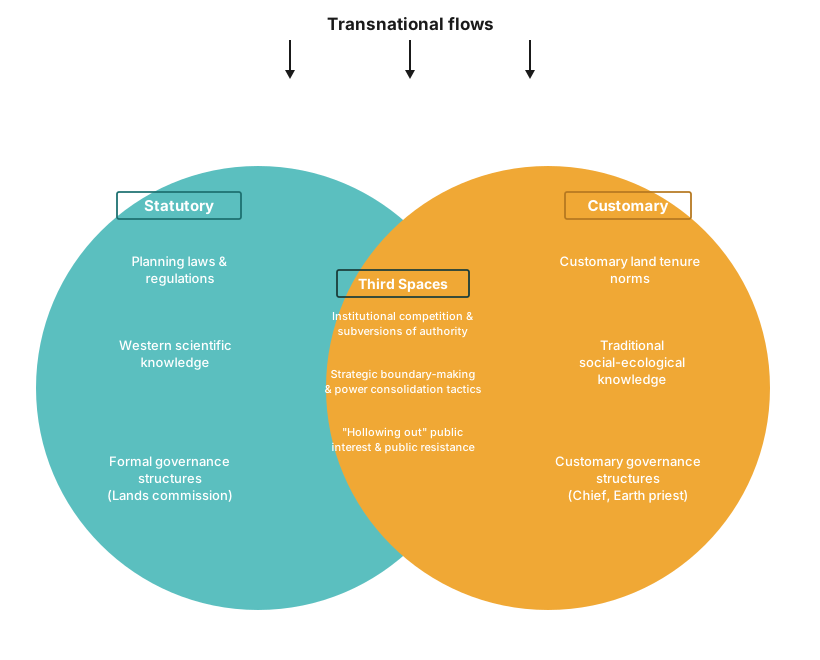
My research asks how the public interest can be protected where multiple systems of authority and competing stakeholder interests overlap. I approach this question through environmental governance theory, environment and land use planning, sustainability science and political ecology, and use institutional, process-based and comparative methods to identify the conditions under which governance succeeds or fails. The work is grounded in fieldwork across Sub-Saharan Africa and Canada.
Research themes
Environmental Governance
My work on environmental governance examines how hybrid arrangements, spanning state institutions, market actors, civil society organisations and local communities, shape access to land, biodiversity and environmental resources, and the conditions under which conservation and planning objectives are pursued equitably. A central concern is how power, recognition and redistributive justice are embedded, or foreclosed, in governance design.
Environment and Land Use Planning
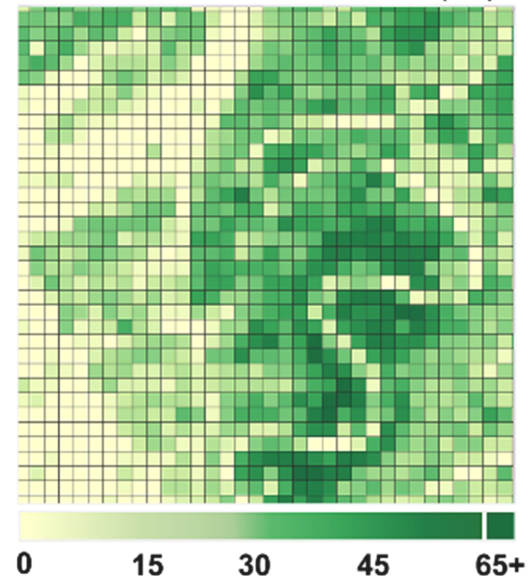
This theme investigates how environmental considerations are, and should be, integrated into planning practice. It examines how scenario and futures-oriented planning engages with social equity, how climate adaptation planning can centre marginalised communities, and how urban green infrastructure can be designed to avoid the displacement associated with green gentrification.
Biodiversity Conservation and Working Landscapes
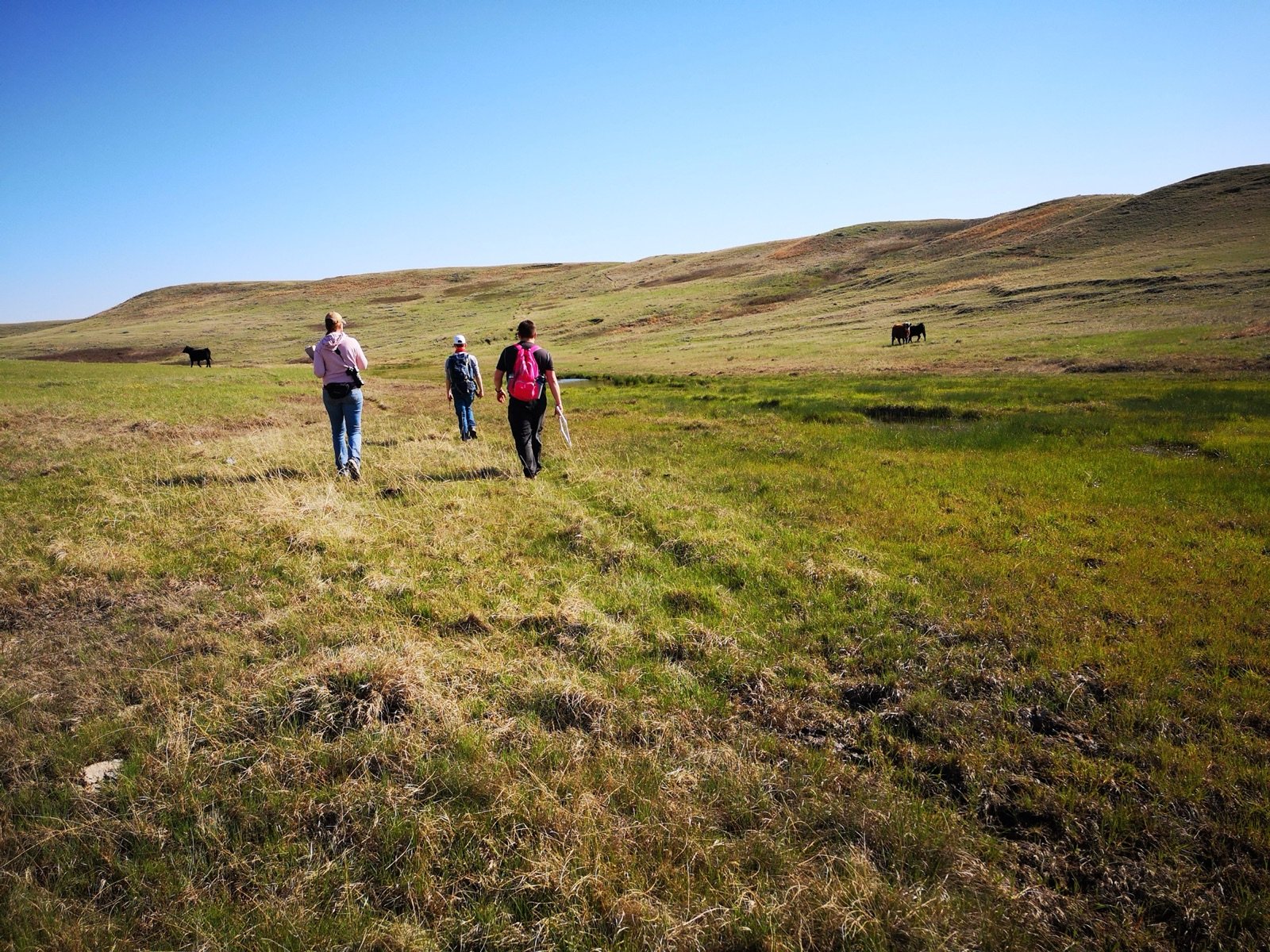
Much of the land that matters for biodiversity is working land: farms, rangelands and private holdings that provide ecosystem services while remaining outside formal protected areas. This theme examines how conservation is governed on working land, and how landowner incentives, market mechanisms, voluntary frameworks and community institutions can be aligned with biodiversity outcomes.
Urban Development and Sustainability in Sub-Saharan Africa
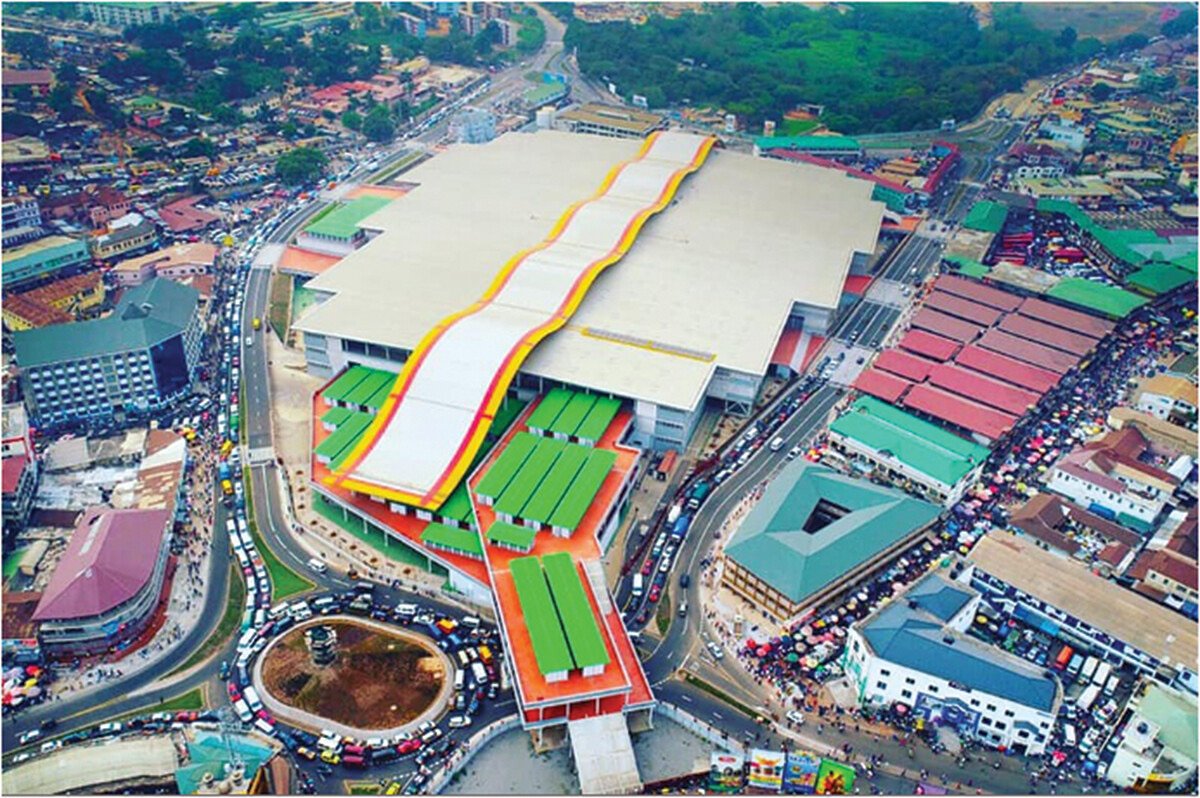
In the rapidly urbanising cities of Sub-Saharan Africa, statutory planning operates alongside customary authority and informal practice. Drawing on fieldwork in Ghana, this theme examines how land, livelihoods and public space are governed in that setting, and asks what it means to protect the public interest in post-colonial cities.
Funded projects
Applicant or co-applicant on six external grants since 2024, totalling CAD $1.5 million.
2026–2028
Decoding the DNA of Urban Form: A National-Scale Morphometric Analysis of Canada's Post-2000 Urban Growth
Social Sciences and Humanities Research Council (SSHRC) Insight Development Grant · $90,520 CAD · Co-applicant
2026–2031
Ethics as Code, Ethics as Craft: Exploring Dynamic Practices and Governance in Planning Ethics
Social Sciences and Humanities Research Council (SSHRC) · $331,000 CAD · Co-applicant
2026–2031
Head in the cloud, feet on the ground: develop and evaluate pathways of integrating remotely piloted aircraft systems (RPAS) and urban data informatics (UDI) in the design and planning of cities
Natural Sciences and Engineering Research Council (NSERC) · $365,583 CAD · Co-applicant
2026–2027
Pathways to Biodiversity Action for Community-Serving Businesses in Canada
Chiu Centre for Business Serving Community Research Fellowship, University of Manitoba · $10,000 CAD · Applicant
2026–2031
Reimaging relations with land, water, and each other: Co-producing a theory and practice of Sustainability Transitions from Below
Social Sciences and Humanities Research Council (SSHRC) · $484,897 CAD · Co-applicant
2024–2028
Biodiversity conservation in working landscapes
Social Sciences and Humanities Research Council (SSHRC) · $207,000 CAD · Co-applicant
2024–2026
Governance innovations for accelerating business action on biodiversity in Canada
Research Manitoba · $40,000 CAD · Applicant
Recent papers
2026 · Urban Forestry & Urban Greening